
Forging Technology Blogs
Deep-dive technical guides on forging technology metallurgy, ASTM/DIN standards, seamless ring rolling tolerances, and NDT ultrasonic testing.
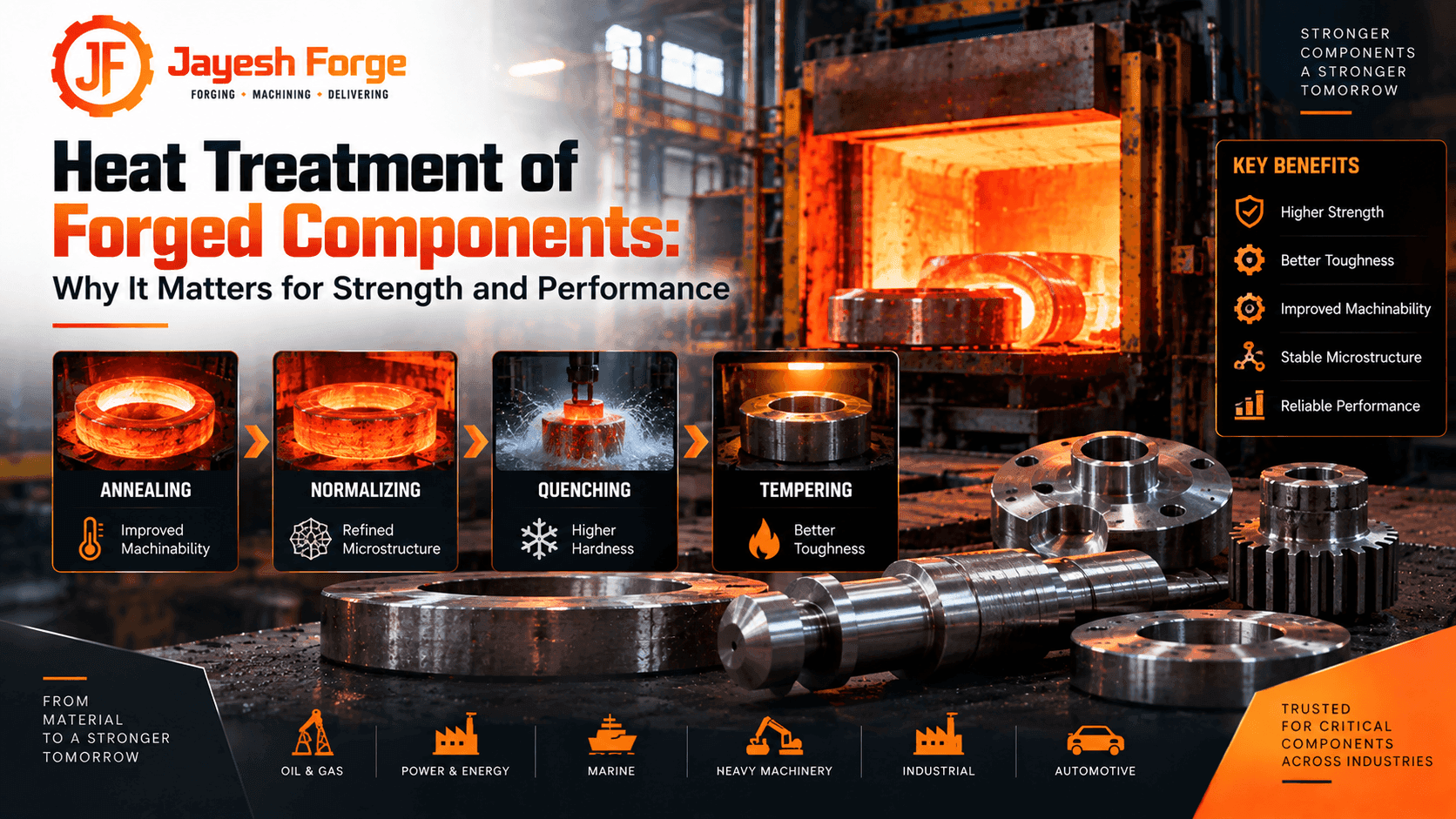
Heat Treatment of Forged Components: Why It Matters for Strength and Performance
Forging creates the component shape, but heat treatment helps achieve the required material condition and mechanical properties. Understand common heat-treatment processes and what engineers should specify when sourcing forged components.

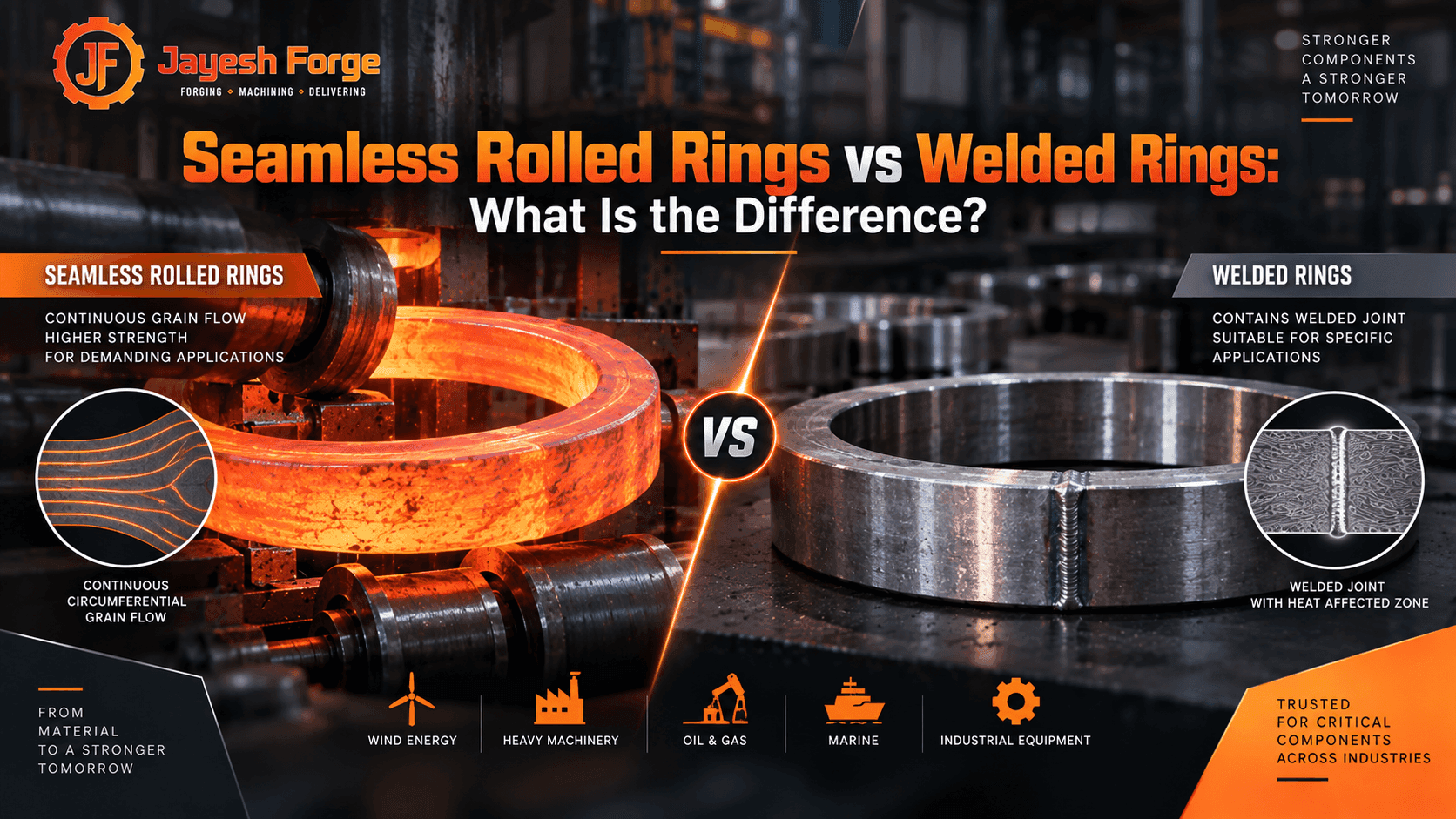
Seamless Rolled Rings vs Welded Rings: What Is the Difference?
Seamless rolled rings and welded rings can look similar after machining, but their manufacturing routes are fundamentally different. Learn how ring rolling, welding, grain flow, inspection and application requirements influence ring selection.
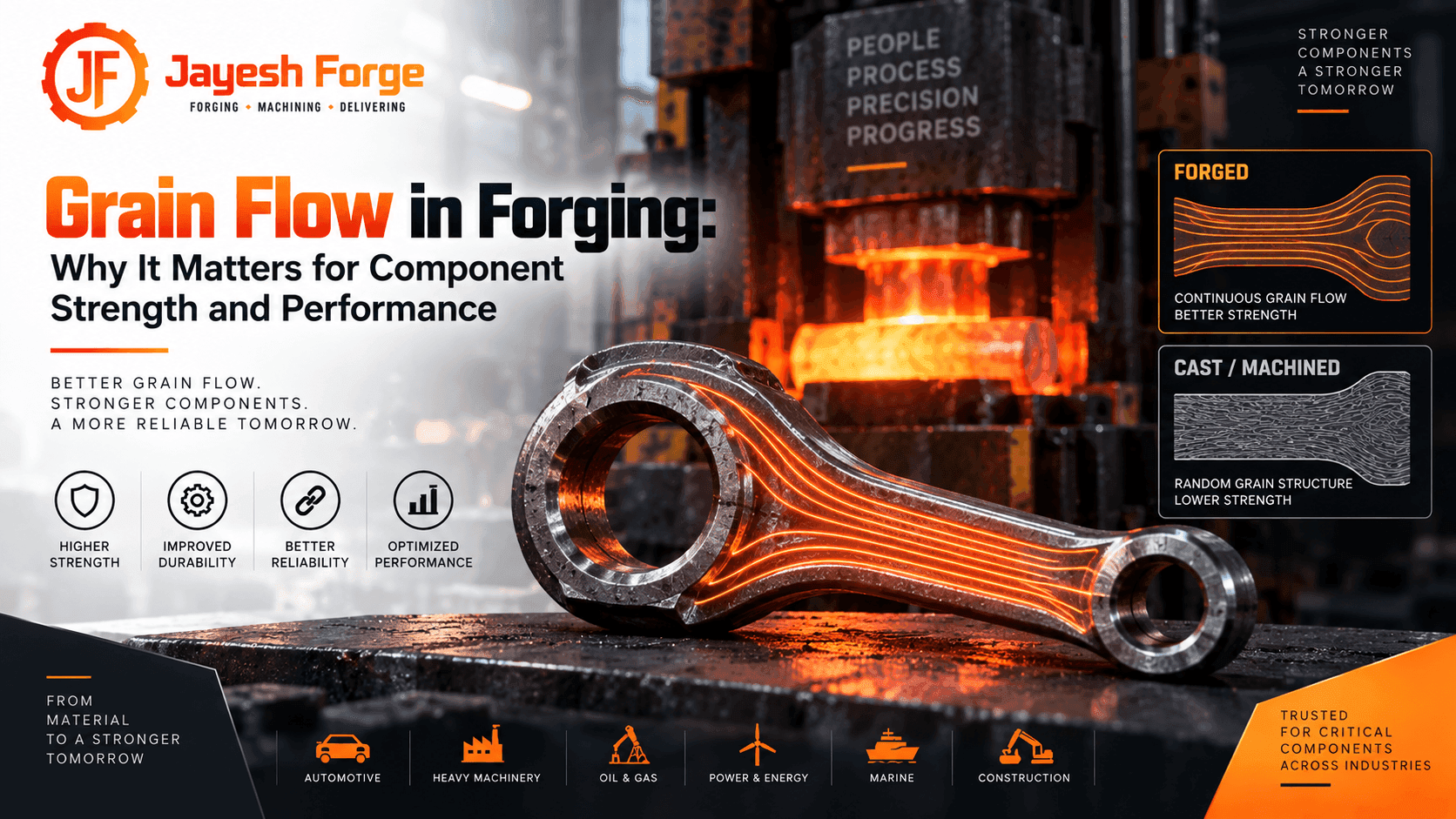
Grain Flow in Forging: Why It Matters for Component Strength and Performance
Grain flow is one of the important characteristics of forged components. Understand how metal deformation influences grain flow and why component geometry, forging direction, reduction, heat treatment and machining must be considered together.
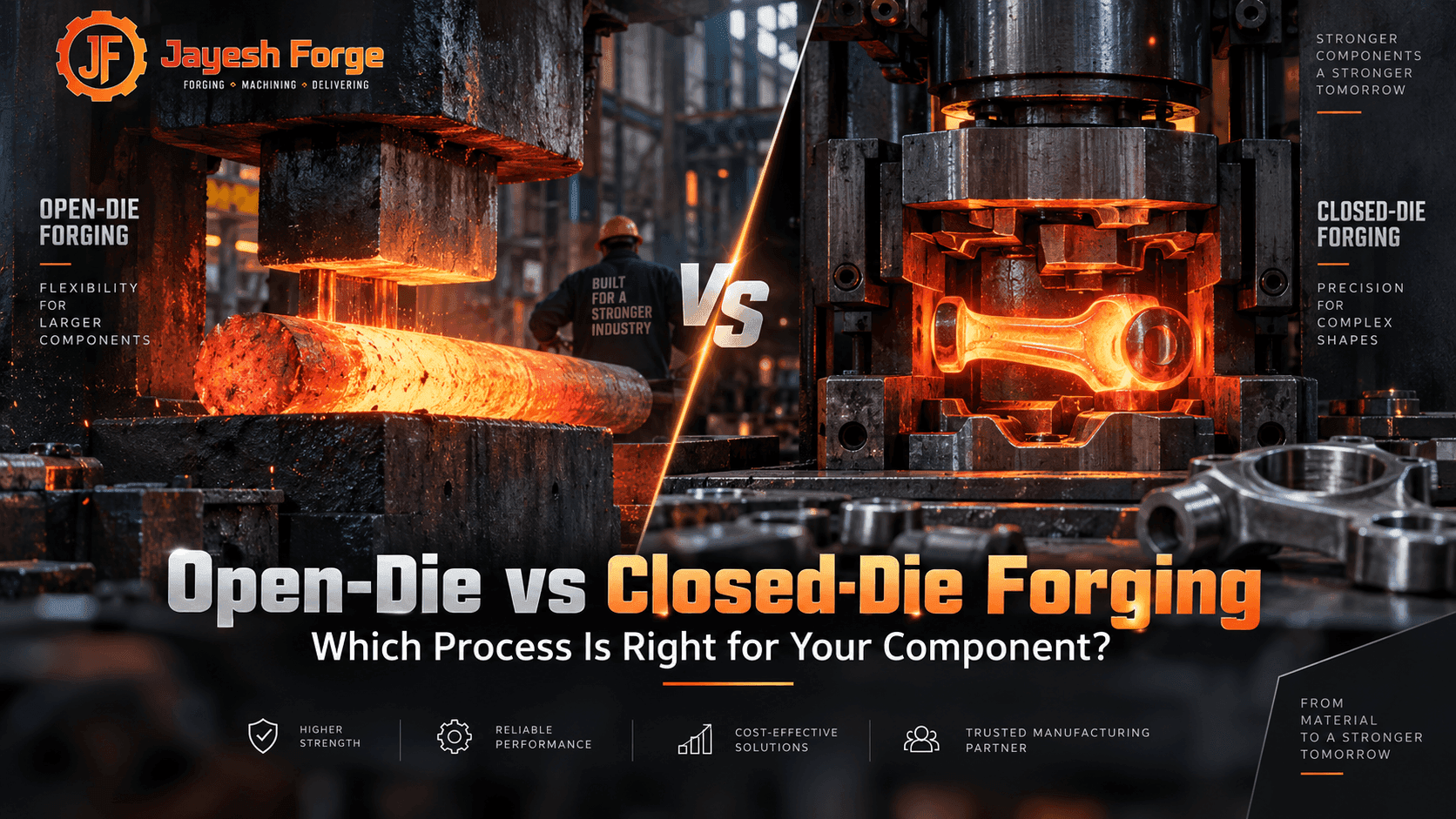
Open Die vs Closed Die Forging: Which Process Is Right for Your Component?
Choosing between open-die and closed-die forging depends on more than component shape. Size, geometry, material, production quantity, tooling, grain flow, machining requirements, tolerances, and the final application all influence the right manufacturing route.
Categories
Submit Technical RFQ
Connect with our metallurgy experts for custom die estimates, material substitution, or seamless rolled ring production.
Request a Forging Quote→Have Technical Questions for Our Plant Metallurgists?
Consult directly with our Rajkot engineering team regarding material substitution, grain refinement, or custom die estimates.